News

  • 8 October 2026

    What your trucks already know about your warehouse

    Ask a warehouse manager how efficient their fleet is, and most will point to a dashboard: units picked per hour, orders shipped per shift, maybe a utilization percentage pulled from the WMS. Ask how much of a truck's shift is spent actually moving product, versus driving empty or sitting idle, and the answer usually gets vaguer fast.

    That gap is not a reporting problem. It is a visibility problem. Forklifts and tow tractors run constantly, but almost nothing captures what they are doing between the start and end of a task — only that the task happened.

    Tobias SjölinRead more
  • 16 September 2026

    What it looks like when a physical AI company runs on agents

    This week's Autonomy Exchange gathering in Malmö included a session on a question that does not usually get its own slot at a robotics conference: what does the back office of a physical AI company look like once agents are doing a share of the daily work. It is worth writing down plainly, because it says something about the same bet the product makes on the warehouse floor — give a system continuous, structured visibility into what is actually happening, and the work around it changes shape.

    Most companies selling autonomous mobile robots and forklift automation into warehouses are organized, on the back end, the way enterprise software companies have been organized for two decades: people doing account research, people drafting outreach, people scanning for competitor and customer signals on a weekly or monthly cadence. There is rarely anything structurally unusual to report, because the operating model looks the same everywhere.

    Carl SilberskyRead more
  • 9 September 2026

    Show the unseen

    What we do can feel like magic. Cameras on mobile robots and operated vehicles capture the spaces they move through. Staer turns those images into a live picture of what is there and where it is, continuously indexing and positioning what the cameras see. It makes the activity on a warehouse floor visible and measurable in ways that were not possible before.

    That takes a lot of work, and explaining it clearly is a challenge of its own. As the product has taken shape, we have more to show and share. We need a brand that helps make that work understandable, so customers can see what it means for them.

    Joakim BorgRead more
  • 1 September 2026

    Why Spatial Intelligence, Why Warehouses, Why Now

    Physical AI is having a moment. Humanoids that walk, models that fold laundry, vehicles that drive without a person behind the wheel — the demos are striking, and the funding has followed them. But the setting where physical AI is quietest and closest to daily, measurable use isn't the one getting the attention. It's the warehouse.

    For most of the last decade, "AI" meant software that lived on a screen: a model reading text, ranking search results, classifying images drawn from a training set. Physical AI is a different problem. The model has to understand one specific three-dimensional space, not a distribution of examples — a particular floor, a particular aisle, a particular rack that moved four inches since Tuesday.

    Carl SilberskyRead more
  • 25 February 2026

    The Step Most Warehouses Skip Before Deploying Robots

    In the spring of 2025, a logistics director at a large Nordic retailer did something that would have seemed odd to anyone watching. He pulled out his phone, opened a stopwatch, and followed one of his warehouse workers around for an entire shift.

    The worker's name doesn't matter. What matters is what the logistics director counted: fourteen times that day, the worker left what he was doing to go look for something. A pallet that had arrived but hadn't been racked. A shipment that the system said was in aisle 12 but wasn't. A product that a customer needed and nobody could locate without walking the floor.

    Carl SilberskyRead more
  • 18 December 2025

    Staer Sponsors Nav2: Extending ROS with Visual Semantic Reconstructions

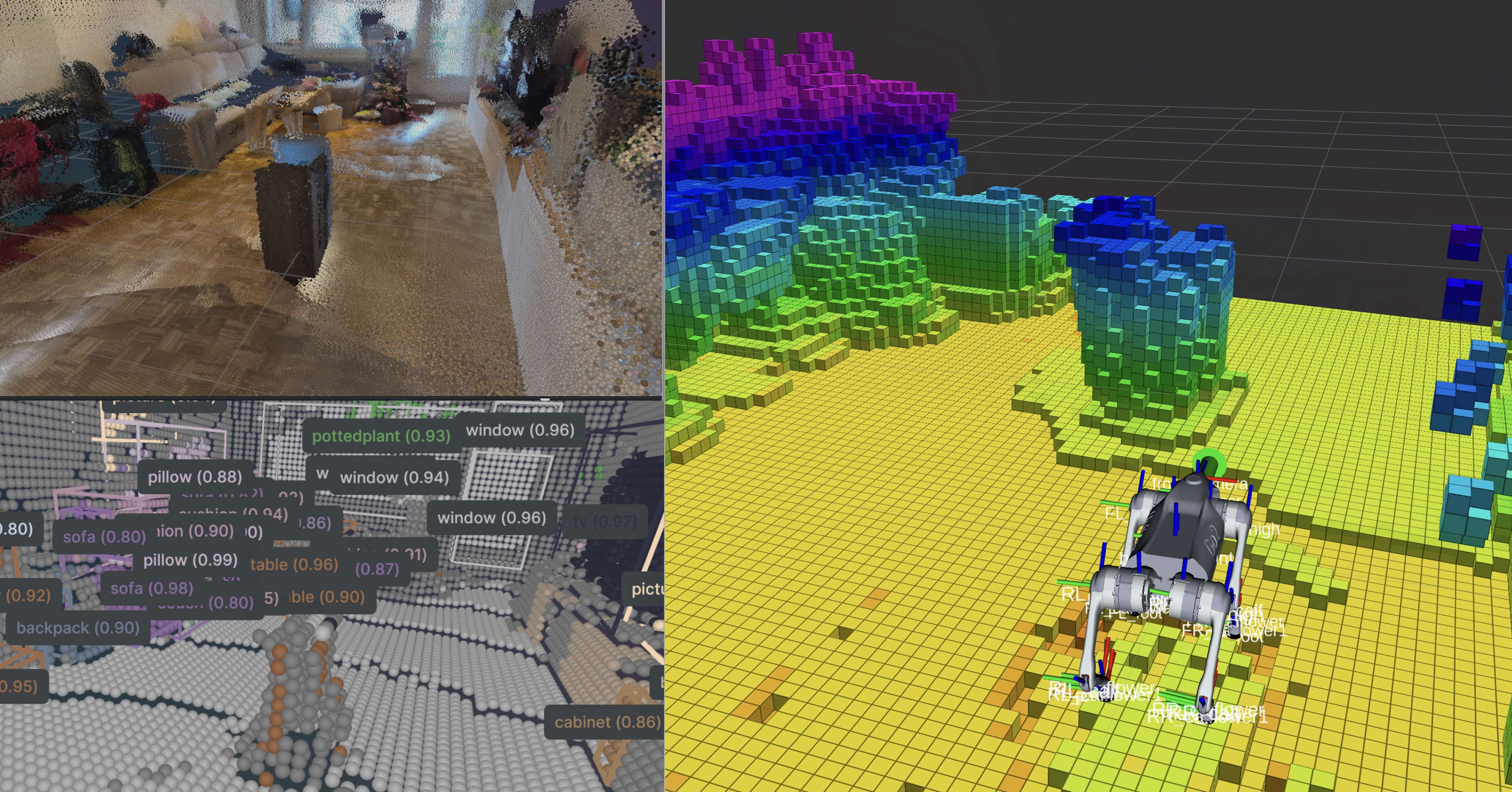
    Staer joins an distinguished list of Nav2 Sponsors committing to the long-term development and maintenance of the industry standard framework. Staer is building the physical AI platform for robust, efficient, and safe fleet coordination for autonomous mobile robots (AMRs). The partnership with Open Navigation seeks to unlock the potential for high-fidelity navigation across diverse environments including homes, warehouses, agricultural fields, and more.

    Staer Nav2 integration preview Preview of 3D semantic map integration in Nav2

    Yubin KuangRead more
  • 15 October 2025

    Mythbusting Physical AI: Thoughts from a recent panel

    When Amazon announced their one-millionth robot deployment this summer, it seemed like a watershed moment. But Amazon is the exception, not the rule. Most logistics operations don't look anything like Amazon's hyper-structured environments.

    At Staer, we build intelligence for mobile robot fleets operating in the reality most enterprises face: messy operations, ad hoc processes, and under-instrumented facilities. Recently, I joined Søren Halskov Nissen from Yaak and Sam Baker from Planet A for a panel at The Drop, where we unpacked hard truths about mobile robotics. Several persistent myths aren't just wrong—they're actively holding our industry back.

    Jan Erik SolemRead more